What Up Nerds?
My wonderful brilliant beautiful girlfriend has been traveling with her family eastwards across Siberia. She traveled very quickly right across Russia towards the pacific. I can't help but think about the days when Russia its self was charging across Siberia towards the sea and beyond. Russian expansion is some of the most remarkable in western history. And the inevitable clash that expansion caused is likewise remarkable. It resulted in one of the most interesting battles of east meet west I know of.
About a hundred and ten years before today the Russian empire was enormous. It spanned most of northern Eurasia and included much more of Europe than does present day Russia. And it was still expansionist. In the south it had, with the help of a few well chosen allies, essentially forced the concession of Port Arthur from China. And Russia had also started making inroads into Manchuria and northern Korea. The other empire that was much closer to and that was expanding into this territory was Japan.
The thirty seven year old Japanese Empire didn't think it would be able to take on Russia and any of her European allies in a war. So at first Japan offered the expansionist Russians a partition of the disputed territory, giving Russia Manchuria and giving Japan northern Korea. This wouldn't have been too bad a deal for Russia.
The Russians and Japanese negotiated on this basis, but the Russians were unwilling to consent, believing themselves to have the stronger military position. But then the Japanese secured an alliance with the British that ensured the Brits would fight off any Russian allies who joined a potential Russo-Japanese War. With this alliance the Japanese saw their position grow much stronger. So when Russia once again rejected their offer to split the disputed territory, Japan was willing to fight it out.
At this point the Japanese thought they could probably win an at least short-term victory and could use that victory to extract concessions from Russia. The Russians felt certain they would win too, and Tsar Nicholas is rumored to have wanted war because he thought it could ignite Russian patriotic fervor.
On February 8, 1904 the Japanese declared war, and launched an attack on the Russian fleet at Port Arthur that very night. Because of how bad communication was, that was actually before the declaration of war had even reached Moscow and the Tsar. That meant that news of the Japanese attack came before the news of the war declaration. The Japanese hit the two biggest Russian battleships hard in the first attack and they injured the rest of the fleet too. Still, none of the big ships were sunk, so there was still very much a question of who would win. The Russians weren't beat by a long shot, and they dug in at their port. The Japanese used this chance to blockade the besieged Russians and to seize Korea. They landed at Inchon and quickly overran the rest of the country.
After taking Korea, the Japanese pressed on towards Port Arthur. The Japanese did their best to effect a lightning fast war that could be won before Russian reinforcements arrived in great numbers. The Russians, by contrast, tried only to slow the Japanese down as much as possible and to exact as high a casualty toll on the Japanese as possible. They succeeded at their second goal. The Japanese had completely surrounded and besieged port Arthur before too long, but they had suffered stunningly high losses. And Russia still had many more soldiers coming.
The Japanese besieging Port Arthur sunk almost the whole Russian Pacific fleet in fairly short order by using offensive mine-laying tactics. The Russians soon hit the Japanese back with offensive mining tactics but the Japanese fleet was much closer at hand, and could more easily replenish their losses. Even so, the Russians sank a third of the Japanese battleships. The Russian position at Port Arthur was hit hard, but the battle for it was hurting the Japanese much worse than it hurt the Russians. The Japanese were not in a great position. The Tsar, perhaps not happy, was at least content.
And then the Russian commander surprised everyone on both sides of the war by surrendering. He had decided that since the fleet had been destroyed, the purpose for defending Port Arthur had been lost. So even though the Russian Empire was doing very well off of the defense of Port Arthur, he surrendered. The Japanese were ecstatic. The Russians were furious.
The Japanese fleet now tried to attack and destroy the bedraggled remnants of the Russian fleet, to knock the Russian military out of the east all together. But when a quick victory wasn't forthcoming and the word of approaching Russian reserves arrived, the Japanese commander Togo left the Russians to limp back to a friendly port, and returned to Port Arthur. No, not THAT Togo.
The reinforcements were the ships of the Russian Baltic fleet, which was sent from the Russian home waters all the way around Europe, Africa, and Asia to reinforce the Russians. They left Russia for the far east, and they made the long journey while the land armies of the Russians and Japanese in Manchuria hunkered down for the winter.
The winter came and went, and when it went the Japanese moved their land forces to attack the town of Mukden, which was at the door of the rest of Manchuria. Both sides dug in, the Japanese attacked, and many soldiers were killed. Eventually the Russians saw that their position was about to be encircled, and retreated. They suffered 90,000 casualties. The Japanese suffered too, but they at least held Mukden for it.
Now everything was up to the arrival of the Baltic fleet.
The Baltic fleet had a few options. They had to get to the only remaining Russian port: Vladivostok. But there were a few diffenerent ways they could go. One would be to steam around the outside around the Japanese archipelago. That was safer, but it would also give the Japanese more time to consolidate their positions. Another way would be to steam straight through the narrow straits between Japan and Korea. This was the sort of risky but daring move that had the potential to give the Russians enough speed to knock the Japanese off balance and to win the war.
The Japanese had nearly taken the entire pacific theater. So the Russian admiral decided that the necessity was worth the risk and chanced the more dangerous, shorter route. Under the cover of night he doused his fleet's lights and prepared to sneak through. Had he been fully refueled he might have forgone the maneuver and attacked the Japanese fleet outright. After all he but outnumbered and outgunned them. But he needed to fuel up, so one night he started to run the narrows.
All was going well for the Russians, except one little issue. Their safe passage required the cover of darkness. The hospital ships trailing them, in compliance with the rules of war, had to leave their lights on. Japanese fishermen spotted the hospital ships, estimated the rest of the fleet's position, and went to tell admiral Togo. Togo moved swiftly and audaciously into position to cut off and completely obliterate the Russians.
They attacked, and their attack was perfect. All the Russian battleships were sunk in that one battle, as was most of the rest of the convoy. Only three smaller Russian ships escaped to Vladivostok.
The Japanese had won a crushing victory. The Russians ultimately could have fought on, mustered more forces and ultimately probably won. But the Russian political mood would not accept that. In 1905, the same year the Baltic fleet was destroyed, the forces of Russian society forced the Tsar to cede absolute power and create a proto-parliament. This was partly a result of the humiliating defeat to the Japanese. Maybe Russia had the capacity to continue and to win the war, but the Russian people were unwilling to do so.
And so Russian expansion in the east was halted. For a while, anyway.
My wonderful brilliant beautiful girlfriend has been traveling with her family eastwards across Siberia. She traveled very quickly right across Russia towards the pacific. I can't help but think about the days when Russia its self was charging across Siberia towards the sea and beyond. Russian expansion is some of the most remarkable in western history. And the inevitable clash that expansion caused is likewise remarkable. It resulted in one of the most interesting battles of east meet west I know of.
About a hundred and ten years before today the Russian empire was enormous. It spanned most of northern Eurasia and included much more of Europe than does present day Russia. And it was still expansionist. In the south it had, with the help of a few well chosen allies, essentially forced the concession of Port Arthur from China. And Russia had also started making inroads into Manchuria and northern Korea. The other empire that was much closer to and that was expanding into this territory was Japan.
 | |
|
The Russians and Japanese negotiated on this basis, but the Russians were unwilling to consent, believing themselves to have the stronger military position. But then the Japanese secured an alliance with the British that ensured the Brits would fight off any Russian allies who joined a potential Russo-Japanese War. With this alliance the Japanese saw their position grow much stronger. So when Russia once again rejected their offer to split the disputed territory, Japan was willing to fight it out.
At this point the Japanese thought they could probably win an at least short-term victory and could use that victory to extract concessions from Russia. The Russians felt certain they would win too, and Tsar Nicholas is rumored to have wanted war because he thought it could ignite Russian patriotic fervor.
On February 8, 1904 the Japanese declared war, and launched an attack on the Russian fleet at Port Arthur that very night. Because of how bad communication was, that was actually before the declaration of war had even reached Moscow and the Tsar. That meant that news of the Japanese attack came before the news of the war declaration. The Japanese hit the two biggest Russian battleships hard in the first attack and they injured the rest of the fleet too. Still, none of the big ships were sunk, so there was still very much a question of who would win. The Russians weren't beat by a long shot, and they dug in at their port. The Japanese used this chance to blockade the besieged Russians and to seize Korea. They landed at Inchon and quickly overran the rest of the country.
After taking Korea, the Japanese pressed on towards Port Arthur. The Japanese did their best to effect a lightning fast war that could be won before Russian reinforcements arrived in great numbers. The Russians, by contrast, tried only to slow the Japanese down as much as possible and to exact as high a casualty toll on the Japanese as possible. They succeeded at their second goal. The Japanese had completely surrounded and besieged port Arthur before too long, but they had suffered stunningly high losses. And Russia still had many more soldiers coming.
 |
| The battles were incredibly hard-fought. Some sources portray these battles as a precursor to the immensely deadly trench warfare battles of WWI. It's not a bad comparison. (pic from Wiki) |
The Japanese besieging Port Arthur sunk almost the whole Russian Pacific fleet in fairly short order by using offensive mine-laying tactics. The Russians soon hit the Japanese back with offensive mining tactics but the Japanese fleet was much closer at hand, and could more easily replenish their losses. Even so, the Russians sank a third of the Japanese battleships. The Russian position at Port Arthur was hit hard, but the battle for it was hurting the Japanese much worse than it hurt the Russians. The Japanese were not in a great position. The Tsar, perhaps not happy, was at least content.
And then the Russian commander surprised everyone on both sides of the war by surrendering. He had decided that since the fleet had been destroyed, the purpose for defending Port Arthur had been lost. So even though the Russian Empire was doing very well off of the defense of Port Arthur, he surrendered. The Japanese were ecstatic. The Russians were furious.
The Japanese fleet now tried to attack and destroy the bedraggled remnants of the Russian fleet, to knock the Russian military out of the east all together. But when a quick victory wasn't forthcoming and the word of approaching Russian reserves arrived, the Japanese commander Togo left the Russians to limp back to a friendly port, and returned to Port Arthur. No, not THAT Togo.
The reinforcements were the ships of the Russian Baltic fleet, which was sent from the Russian home waters all the way around Europe, Africa, and Asia to reinforce the Russians. They left Russia for the far east, and they made the long journey while the land armies of the Russians and Japanese in Manchuria hunkered down for the winter.
The winter came and went, and when it went the Japanese moved their land forces to attack the town of Mukden, which was at the door of the rest of Manchuria. Both sides dug in, the Japanese attacked, and many soldiers were killed. Eventually the Russians saw that their position was about to be encircled, and retreated. They suffered 90,000 casualties. The Japanese suffered too, but they at least held Mukden for it.
 |
| The Japanese Army after Mukden. (Pic from Wiki) |
Now everything was up to the arrival of the Baltic fleet.
The Baltic fleet had a few options. They had to get to the only remaining Russian port: Vladivostok. But there were a few diffenerent ways they could go. One would be to steam around the outside around the Japanese archipelago. That was safer, but it would also give the Japanese more time to consolidate their positions. Another way would be to steam straight through the narrow straits between Japan and Korea. This was the sort of risky but daring move that had the potential to give the Russians enough speed to knock the Japanese off balance and to win the war.
The Japanese had nearly taken the entire pacific theater. So the Russian admiral decided that the necessity was worth the risk and chanced the more dangerous, shorter route. Under the cover of night he doused his fleet's lights and prepared to sneak through. Had he been fully refueled he might have forgone the maneuver and attacked the Japanese fleet outright. After all he but outnumbered and outgunned them. But he needed to fuel up, so one night he started to run the narrows.
All was going well for the Russians, except one little issue. Their safe passage required the cover of darkness. The hospital ships trailing them, in compliance with the rules of war, had to leave their lights on. Japanese fishermen spotted the hospital ships, estimated the rest of the fleet's position, and went to tell admiral Togo. Togo moved swiftly and audaciously into position to cut off and completely obliterate the Russians.
They attacked, and their attack was perfect. All the Russian battleships were sunk in that one battle, as was most of the rest of the convoy. Only three smaller Russian ships escaped to Vladivostok.
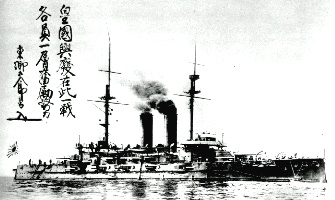 |
| There's some pretty cool battle art too. (Pic from Wiki) |
The Japanese had won a crushing victory. The Russians ultimately could have fought on, mustered more forces and ultimately probably won. But the Russian political mood would not accept that. In 1905, the same year the Baltic fleet was destroyed, the forces of Russian society forced the Tsar to cede absolute power and create a proto-parliament. This was partly a result of the humiliating defeat to the Japanese. Maybe Russia had the capacity to continue and to win the war, but the Russian people were unwilling to do so.
And so Russian expansion in the east was halted. For a while, anyway.


